Tuesday, November 30, 2010

War Appeal

On my recent visit to Beirut, the traces of twenty-year-long civil war are still unmistakably there. They appear as small as bullet holes on a building’s façade, or as large as entire ghastly structures, bricked-up for safety.  The most notable of these is the infamous Holiday Inn, a monumental multi-story ruin, standing on a prime city site next to a brand-new swish InterContinental. (Built extra-strong to withstand an earthquake, it became a snipers’ lookout during the war, and no amount of grenades or rocket fire could bring it down.)

It is a journalistic cliché to liken these traces to scars on the city’s fabric. In the context of Lebanon, I would rather call them tattoos. Not only these jarring reminders of the not-so-distant past give the city its peculiar gritty character, they are sometimes used as a source of inspiration by contemporary Lebanese designers. There is, for example, a well-known night club B018, designed by Bernard Khoury in an underground bunker in the former war zone, complete with coffins for seats. One could say that traces of war give Beirut a feel of authenticity, something conspicuously lacking in many glittering capitals in the Middle East.

In his bizarre book What’s Wrong with Plastic Trees, Martin Krieger writes about background noise in the analogue LP records, which continue to fascinate the music buffs. “A certain level of what is conventionally defined as noise and distortion may contribute to that sense of realism and accuracy,“ he says. In other words, noise provides authenticity.

Like everything else, noise could probably be faked. But why would someone bother? Yet in design of today’s new cities, in the Gulf region and elsewhere, the imperfections and accidents are badly needed to achieve that exciting feel of an authentic, lived-in urban environment. We have to learn how to design, plan, and implement these accidents. No one wants to wait for a war.


Sunday, October 31, 2010

Heaven and Hell

A few years ago I visited the Cathedral in Orvieto, known among the cognoscenti for a chapel with frescos by Luca Signorelli with their riveting depictions of Heaven and Hell.

Signorelli’s Hell, which inspired Michelangelo’s Last Judgment, was expressive, horrific, rich in gruesome and precise detail. The image of Heaven seemed less conclusive. The artist depicted groups of people, some naked, some dressed in togas, standing around, singing, or moving in slow motion under musical accompaniment of the angels above. Can one imagine doing this forever?!

I think it was Joseph Boyce who had said that the very idea of perpetual happiness should immediately turn into its opposite. In Doha, I am often reminded about this maxim. The malls, the lobbies and public areas of hotels, and – above all – the Pearl, a luxury housing development by the sea, are all designed to represent Paradise on earth. The materials are marble and bronze, the air is conditioned and perfumed, soft music emanates from speakers hidden in plants and trees. Groups of people in long flowing clothes – men in white thobes, women in black abaias – slowly stroll around.

This is supposed to be Heaven. No expense has been spared to assure people's happiness. Then why do these places begin to feel oppressive after about twenty minutes?  The early Modernists’ dreams of “total design”, albeit of the opposite kind, are realized here.  The architects try hard to create a total, seamless experience, which promptly turns into an overwhelming sensorial monotony. Unlike Signorelli’ image, this Paradise is brand-new.  Amiss here is power and beauty of the old, the human dimension of the lived-in and the worn-off.

Does this mean that the malls will look better when they age? Not a chance. Here in Doha, they will be promptly replaced with new buildings once again.


Thursday, July 15, 2010

Teaching in a Time of Uncertainty

Since the beginning of professional industrial design – throughout the entire twentieth century and into the first decade of the twenty-first ­– a designer has been a figure of confidence and authority. He (rarely, she) was a person to provide answers, to solve problems, to know more than the public could possibly knew.  A notion of an unsure designer, a questioning designer, or, heaven forbid, a doubtful designer would appear almost oxymoronic, and certainly unprofessional.

Perhaps the beginning of the new decade will go down in history as the outset of Design Uncertainty. For the first time ever, designers are willing to ask themselves, openly and publicly, about the nature of their profession, and whether they are dong the right thing. People took note of the question mark in the title of the National Design Triennial, Why Design Now?  Eindhoven Design Academy’s 2010 exhibition in Milan expressed the same sentiment with an even more succinct title, a simple “?

The reasons for self-searching and doubt are obvious, and they are not pretty. Two seemingly never-ending wars contribute to political uncertainty and fuel fears of terrorism.  The economy meltdown of 2008 continues to reverberate around the world. Unimpeded flow of oil gushes out in the Gulf of Mexico, in spite of the efforts of global powers and feats of the world’s best experts. Alice Rawsthorn, The New York Times’ design critic, captured the spirit of our time, speaking of design as “a quest for meaning in a dystopian era.” This existential quest, rather than pursuit of new shapes, is going to define the design effort for years to come.  And any search for meaning always starts with a question.

Clive Dilnot, a professor at The New School University, writes (in an essay, characteristically titled Ethics?Design? ) that the basis of any design activity derives from a fundamental query posed by Socrates: “How should one live?” According to Dilnot, this question cannot lead to a singular answer. Rather, the argument is brought up again and again, by every new generation. Thus, the ethical dimension in design “ is always in question, always in doubt”.

It is not surprising that the best design schools got to be in the forefront of design’s quest for meaning. Unencumbered by market considerations, academia is well suited for experimentation, creative research, and production of ideas. It is good to be a student in times like these. But what about the teachers? The traditional role of all-knowing professor is rapidly changing. Instead, a teacher becomes a fellow researcher, a team leader who works with the group in an interactive, collaborative way. The work inevitably becomes interdisciplinary: a design “product” could be an idea, a service, a material, a narrative, and it is viewed as a process rather than as a finished artifact.

With these thoughts I start a new chapter in my professional life. Recently, I have become a Director of Graduate Design Studies at the Virginia Commonwealth University in Qatar. All complexities and contradictions on the modern world are reflected in the microcosm of Qatar: East and West, old and new, national and global, rich and poor. This is a world in transition, full of its own uncertainties. As such, it should be a great testing ground for new ideas and new solutions. A small group of young men and women from different design backgrounds are joining our program, the first of its kind in the entire Gulf Region. Let the experiment begin. Together, we will be trying to work out our own answers to that nagging question, Why Design Now? 


Wednesday, June 2, 2010

My Tobi Wong

When news about Tobi Wong’s untimely death hit the Internet, many people remembered him as their collaborator. In one way or another, within community of New York designers, he indeed managed to do a project with virtually everyone around.

Here is the story of Tobi’s collaboration with our studio.

I think it was 2004. One day, Tobi Wong, whom I hardly knew at the time, called my studio and asked if we could please give him one of our old trash cans. Needless to say, a few perplexed questions followed, and once we agreed to meet the following day, he explained the gist of his idea. It turned out he had accepted an invitation in Williamsburg for an exhibition of new garbage can designs, before realizing that the project was all about recycled and renewable resources.

“They think they trapped me now”, he confided in me. “They are saying, let’s see what Tobi could possibly come up with.” Well, what he came up with was an illustration of the old adage, One Man’s Trash Is Another Man’s Treasure. His object was (I quote Tobi's own description) “ an orange translucent plastic waste bin previously owned and disposed by the Boym Partners which includes actual garbage from their office.” It helped his project, perhaps, that our bin happened to be a Grcic’s old design classic.

I doubt that many in the crowd spent any time or effort to uncover and appreciate Tobi’s elegant design gesture. Yet for me, this was essential Tobi Wong: always challenging, capable of being outrageous and understated at the same time, ironic in the best tradition of Seinfeld, and tasteful like Oscar Wilde.

I’ll miss you, Tobi, I’ll miss seeing your name on an invitation and thinking: Let’s see what Tobi could possibly come up with.


Tuesday, May 18, 2010

Chairs


By coincidence, this email message came into my mailbox during ICFF, the International Contemporary Furniture Fair in New York. This is the week when furniture is celebrated, by and large, in glittering showrooms around town. Chairs are always recognized as special darlings of the entire scene, as symbolic objects representing the entire furniture industry –or even the field of design in general.

I have just returned from the fairgrounds, where hundreds of manufacturers competed, trying to convince you to buy their new chairs, proving their necessity, relevance and benefits. At first, I thought the message attributed to DLCC was a spoof. The contrast was just too great:

“The chairs in [our] room are old, red ones left behind by the company that used this office space ten years ago.  They creak.  They're uncomfortable.  One of them is missing its left armrest. But in all my years as Executive Director, no one in this office has ever asked me to buy new chairs.  And we won't.” 

The message was, of course, real, and the description of the tattered furniture meant to emphasize tireless and selfless work the campaigners were doing for their cause. Yet unwittingly it underlined another reality of American life. While clothes, shoes, bags, cars, hi-tech gadgets are considered “essential” necessities, furniture and furnishings of our domestic or work environment are still relegated to status of superfluous objects.
In times of economic uncertainty, they are among the first things to be cut from any budget.

It does not seem likely that ICFF will be able to change this unfortunate belief.

Wednesday, May 12, 2010

Reality Check


My mother was born and raised in Moscow; she still lives there, well in her 80s.
Until recently, she used to visit me in New York once in a while. Through her spontaneous, always unpredictable reactions to realities of our American life I was able to learn a great deal about my own preconceptions and hang-ups.

I would take her to Soho, for example, and we’d walk among cast iron buildings on cobblestone streets. “What a horrible area to live”, she’d say. ”There is not one tree around, and what about all this noise and crowds.” A classy meal at Jean-Georges would be dismissed as “something strange on the plate – and not too much of it, either.” Did she see something that we were not noticing?

Needless to say, when I showed her my own designs, she was not too complimentary. Often she’d characterize my objects as superfluous, unnecessary, wasteful – well before sustainability became a buzzword among design critics. My award-winning clocks were dismissed as illegible, chairs – as too small or uncomfortable. Even when she liked a thing, such as a set of utensils, for example, there was always a nagging doubt as to what to do with the old utensils people may already have. When, exasperated, I asked her what kind of things she herself considered appropriate and legitimate, I remember the word “normal” used as an operative term. For example, she referred to an apartment building where she lived as normal. Most things she owned or wore she also called normal.

For years, I used to dismiss her every opinion as irrelevant and uninformed. It is with great surprise I now catch myself applying her-style “reality check” to much design around. Going through images and news from the recent Salone del Mobile, or from forthcoming ICFF, I keep thinking about it again.

At this time of great uncertainty and confusion, when hype rules over substance, when everything is possible and nothing is truly exciting, we may all use my mother’s reality check.

Friday, March 12, 2010

The Year When Stalin Died


This Russian-made leather wallet is in a good shape, considering its age. The embossed image is easily recognizable: it is a fragment of Moscow’s iconic Red Square with the Mausoleum, better known here as Lenin’s Tomb, in the foreground. A closer inspection of the picture (and knowledge of Cyrillic alphabet) would reveal a strange detail. Not one but two names are inscribed on the monumental building: the word LENIN is closely followed by STALIN.

In March 1953, Stalin’s death was mourned by millions of Russian people. Within weeks, his embalmed body was placed next to Lenin’s in an identical glass sarcophagus. They lied there together, like strange evil twins, for less than three years. In February 1956, Stalin’s personality cult was denounced; overnight he was removed and re-buried, and his name forever disappeared from the pristine marble façade.  Thus, I can date my wallet fairly precisely: it could only be made between 1953 and 1956.

My mother and my father met in Moscow in the fall of ‘53.  She was a popular student at a prestigious Institute of Civil Aviation. He, coming from the provinces after military service, worked at a factory and lived in a shared dorm. It was not love from a first sight. My mother was unsure about the attention of a provincial guy; probably there were other suitors as well. Little by little, my dad’s quiet persistence – and his good looks– started to win her over. On my father’s birthday, she invited him for dinner at a Moscow restaurant, and prepared a nice present – this leather wallet.

They had to share the table with another man (a common practice in those years), who was dressed in well-worn military fatigues without any shoulder straps. (I keep thinking it must have been one of the first returning Stalin’s victims, who were just starting to trickle back from the labor camps of Gulag.) At one point, when my father had to excuse himself, the man leaned to look at the gift lying on the table.  He scrutinized the embossed picture for a while. “Things are going to get better now”, he finally said to my surprised mom. “You two will be married in no time.” My parents tied the knot in September 1954; I was duly born nine months later.

I am not sure if my father ever used his present. After Stalin’s demise, the wallet became “politically incorrect”; carrying it around could result in unnecessary discussions. The empty wallet ended up on the bottom of my father’s drawer, where I discovered it by chance, almost fifty years later. Who knows if I would even be around, without the help of this awkward, barely used object.


Wednesday, February 24, 2010

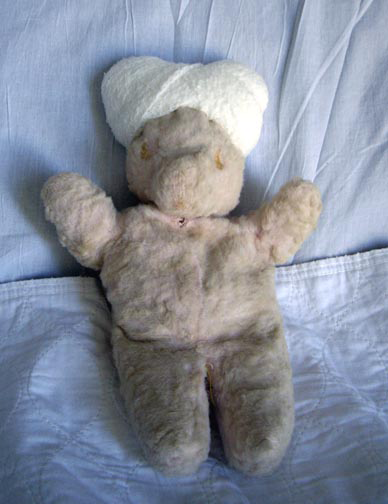
Bear of Life and Death

If you were only allowed to take one object, what would it be? We’ve all heard this common interview question, often placed within an invented extreme situation: In a fire? On a deserted island? On a deathbed? Sometimes people’s choice is pragmatic (a powerbook), sometimes – peculiar and personal (an old photo album), yet the question itself is so reassuringly hypothetical that no one thinks of taking it seriously.

That is until a disaster strikes.

My friend and colleague Larry, an athletic, ironic, and carefree 45-year-old, has recently complained to his doctor about strange hearing problem in one of his ears.  The scan revealed a golf ball-size tumor in his brain. A complex operation was scheduled soon thereafter. What went through Larry’s head in the days and hours before the surgery? Let him speak for himself:

“I was so adamant to have my Teddy Bear laying on the operating table with me, because my grandmother gave it to me when I was 4 years old, the only prior time I ever was in the hospital…In all the places I have traveled and lived, I have always had it with me. When I was just coming to out of surgery, I remember one surgeon held up my Teddy Bear and said, “Your bear says it's time to wake up." I remember sort of seeing that its head was bandaged, and when in the ICU recovery room, I was clear enough to notice that the surgeons took the time and care to wrap its head, as mine was. This was such an endearing detail, which reinforced that on so many levels my surgeons and their team understood every detail, especially their patient.”

How to separate play from seriousness in this metonymic belief, shared by the doctors and patient alike? They all understood the power of an inanimate object to contain our memories, emotions, and beliefs, an object made indispensable precisely because of its lack of any practical purpose.


Wednesday, January 27, 2010

Need and Want


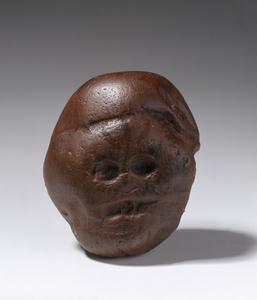
Recently, a curious posting by NYTimes columnist and writer Rob Walker appeared on his blog (www.murketing.com), a story of the Makapansgat Pebble. This anthropomorphic stone was found in what is now South Africa, and is estimated to be about 3 million years old, writes Walker. It was certainly not made by a human ancestor – in those early times they could not make anything yet.  “What’s significant about it is that the experts believe, based on the makeup of the pebble, that the spot where they found it, among ancient bones and whatnot, indicate that some hominid carried the thing several miles.”


“Why was it carried away from its place of origin? Well, obviously we don’t know the precise answer, but clearly it’s not a matter of use-value: The pebble is not functional, it’s not a tool. Whatever motivated the owner of this object, he (or she) certainly didn’t need it. And that is the message of the Makapansgat Pebble: In the history of material culture, it represents the birth of want”, concludes Rob Walker.


Aside from a fascinating insight into history of this little-known artifact, Rob’s posting is worth reflecting on from our designers’ point of view. Throughout the 20th Century, the spread and marketing of “want” was always justified by “need”. A purely symbolic, decorative object (think Philip Stark’s famous lemon juicer) had to be able to perform a function, however compromised, in order to be considered a “legitimate” design product. Most design writers and educators still insist that new products must be based on a new need.  Yet the pebble story seems to imply that in the earliest periods of history the want had actually preceded tool-making and other essential functions, which ultimately made humans human. The first souvenir came well before the first tool.


Today, the old idea of function needs to be re-considered and expanded. Things like souvenirs, collectibles, flowers, or toys enlarge human experience and form an important part of our material culture, even though they do not seem to fit a standard definition of usefulness. Products based on want without need are abound on the market, yet one can’t sell anything founded on need without want.


Wednesday, January 6, 2010

A Real Mendini


I got acquainted with Alessandro Mendini years before I actually met him. In the early 1980s, the Italian architect was at the helm of trendy and sophisticated Domus magazine, which in the world of publications stood out much like Apple stands in the computer industry today. Mendini’s perfect Milanese face looked straight on from the front page of every issue, where he interviewed his famous subjects. Those peculiar enigmatic interviews felt even more alluring because of my sketchy understanding of both Italian and English.

Domus Academy, where I came to Milan to study, was not directly linked to the magazine, yet Mendini’s reputation loomed larger than life over the entire school. Soon I met the man himself, who turned out to be only five-foot-four, but had an irresistible charisma. I learned also that many in Milan were unsure about his work: his message was too complex, too personal, and not too optimistic. Who else would dare to title his own monograph The Unhappy Design?

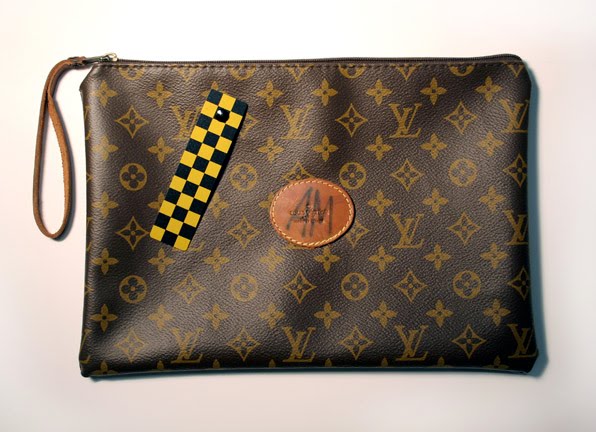
A good example of Mendini’s attitudes was a one-time performance, sometime in 1984, of which I kept an unusual souvenir: a fake Louis Vuitton purse. The counterfeits’ market was flourishing in Milan twenty-five years ago, as it probably continues to this day. The business was conducted on the street, mostly by vendors from Africa, known as “the Senegalese”. For the event, the architect had invited several of the men into an art gallery, along with their illegitimate wares. There was music and vine. Guests could buy a counterfeit bag, quite cheaply, and Mendini would then validate their purchase by attaching a new checkerboard tag and placing his initials over the old label. A fake Vuitton would become an original Mendini.

Many of design preoccupations of the time had found reflection in this simple gesture of the architect: the theme of banal object and originality, the politics of design, the redeeming quality of decoration. Above all, it had a fleeting lightness of a game. Soon the event was forgotten; I do not know how many redesigned bags, if any, remain today.

Around 1985, Alessandro Mendini joined forces with his architect-brother, Francesco, starting a second, “happy” phase of his career, which ultimately brought him much commercial success. By stroke of good fortune, I landed my first job after graduation in Mendini Brothers’ new architectural studio. Their first and only project was an unusual house on the lake Orta, entrusted to them by Alessandro’s old-time friend Alberto Alessi. Mendini’s concept was to extend his ideas of collaborative design to the scale of a villa. Different parts, designed by the likes of Michael Graves, Robert Venturi, Sottsass, even Frank Gehry, were to be merged into one coherent, decorative composition.

On my first day at work, Alessandro said with his characteristic smile: “Let’s play this game together.” Compared to my experience at American architectural offices, his work process did resemble playing. The architect would through around some outlandish ideas, which somehow would make a perfect answer to a problem at hand. Once, after we struggled in vain to line up the parapets of two joined roofs, he finally offered: “Let us just build the roofs first; then we’ll go up there, and figure it out.” Unfortunately, I did not have a chance to climb that roof. My calling soon brought me back to New York. Alessandro Mendini moved on to become a creative director at Swatch, and the brothers had built a host of Swatch stores around the world. We even managed to collaborate again – but that’s another story.